Predator Control

Mustelids
The mustelid family (stoats, weasels and ferrets) are supreme predators of native birds, reptiles and invertebrates.
Stoat predation on young kiwi is the main cause of the continuing decline of mainland kiwi populations.
Feret in the bush. Photo: Ngā Manu Images.

Feral Cats
Feral cats are excellent hunters. They can see in a sixth of the light needed by humans, and have an acute hearing sense.Feral cats impact wildlife directly by eating birds, reptiles and invertebrates. They can spread toxoplasmosis to people and other animals, with the parasite now being found in kiwi, kaka, kereru and kakariki.
Feral cat in the bush. Photo: Canva.

Rats
New Zealand now has 3 species of rat: kiore / Pacific rat; ship rat, Norway rat. Rats impact wildlife directly by eating birds, their eggs and their chicks, lizards and invertebrates. Rats also compete with native wildlife for food.
Rat attacking a fantail nest. Photo: Ngā Manu Images.
Possums
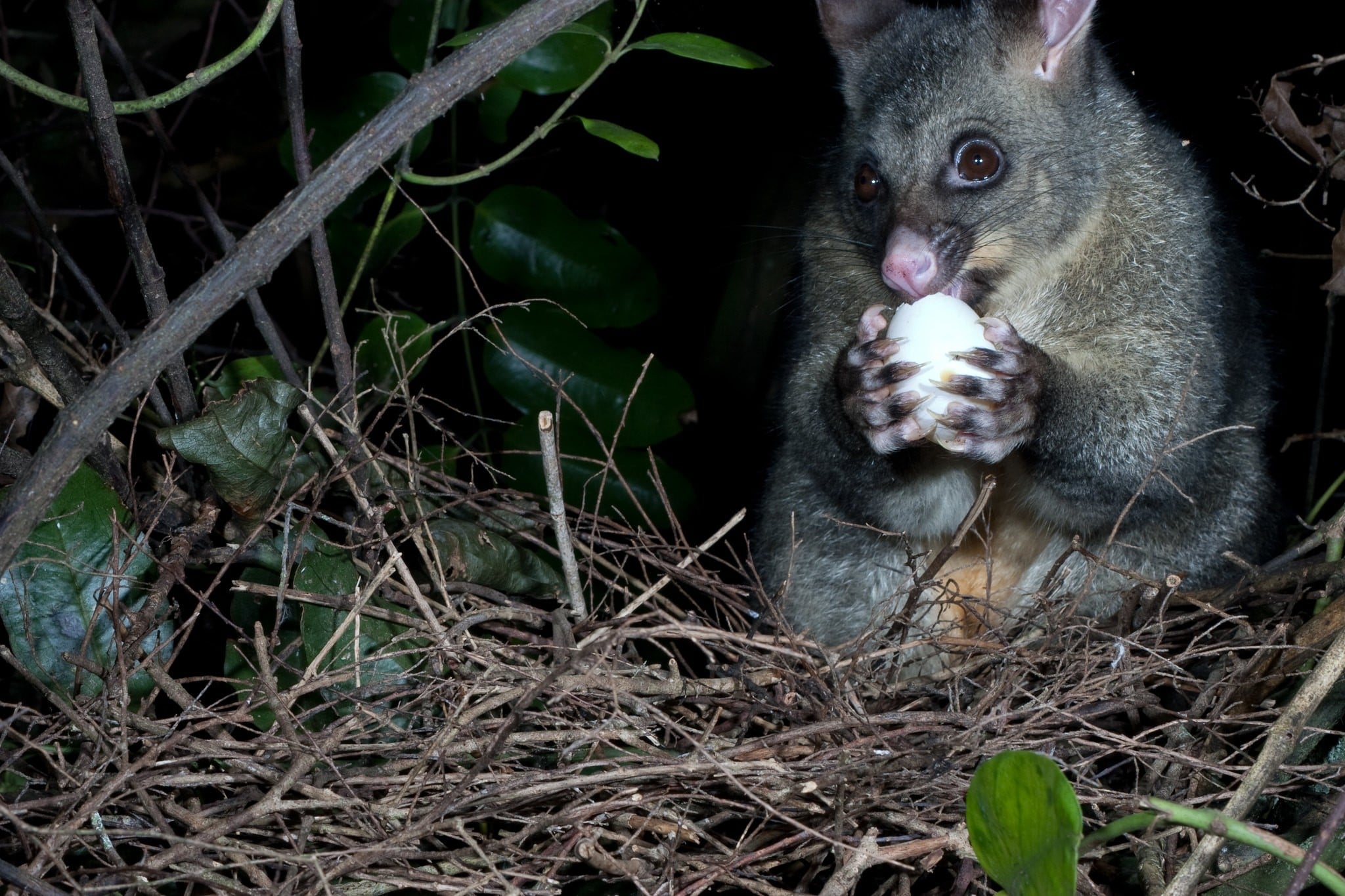
In some areas possums have eaten whole forest canopies of rata, totara, titoki, kowhai, kohekohe and pohutukawa. They also disturb nesting birds, and eat their eggs and chicks.
Possum in a birds nest, eating an egg. Photo: Ngā Manu Images.
The DOC200/250 kill traps are spaced along trap lines at 100metre intervals and serviced monthly, targeting mustelids. However, we do also catch rats and possums in these traps.
While we have a small number of possum traps on the maunga, the main possum control operation is via a controlled “knock down” operation about every 4 – 5 years undertaken by Auckland Council or DOC.
Steven Allen feral cat traps were introduced in 2020 as part of increasing our predator operations in preparation for returning kiwi to the maunga.
Trap Catch Data


A common comment that we receive about our catch numbers is that the numbers of predators caught seems to steadily rise for the first few years before levelling off. And then a sudden spike in the past few years.
There is a good reason for this - the number of traps were rising over the years. We now have a total of 271 traps deployed in the forest of Tamahunga.
Also, the highest percentage of predators trapped is rats, and we will never control those by trapping along. As the number of rat predators - the mustelids and cats - reduces, the number of rats increases. However, rats are not currently our primary target species as they do not impact directly in kiwi breeding and survival.
Toxin delivery via bait stations remains the most effective means of rat control, but use of toxins requires much consultation and planning before it potentially may be used. Is this something we will pursue? We would like to at some stage as rats do impact many other native species - birds, bats and insects. However, at this time the focus is on mustelids and dog control to protect kiwi.
.jpg)


Photos by Tamahunga Trappers when clearing traps. Left, possum in a DOC250 (S. Reekie); middle, stoat in a double-set DOC200 (L. Troup); right, remains of a stoat removed using tongs (L. Troup).